
Press kit
Par Under Review
A turn-based golf roguelike set in the 1930s. Build a deck of clubs golf won’t invent for decades, and beat the golfers of the day at their own game without ever taking a swing.

About the game
“You’re the mathematician?” In the 1930s, that’s the whole job interview, and nobody can say what the mathematician is for. So you invent the job yourself and play golf courses on paper. No swing and no monsters, only the strategic side of golf and par to beat.
Golf is a game of misses
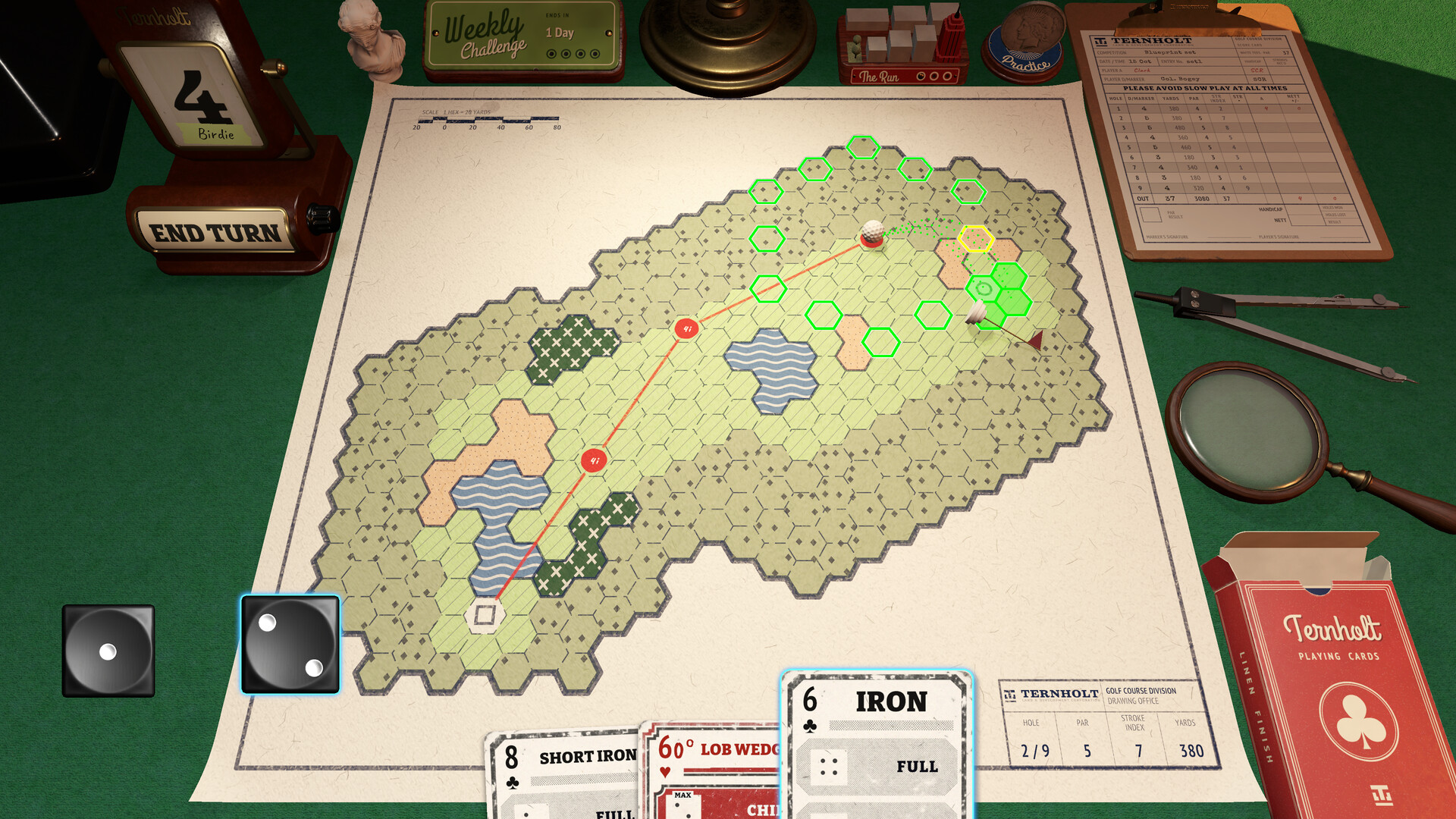
The dice are your golfer: not a lucky one, an ordinary one. Each roll says how far a clean shot goes, and you know it before the shot, which is more than any golfer can say.
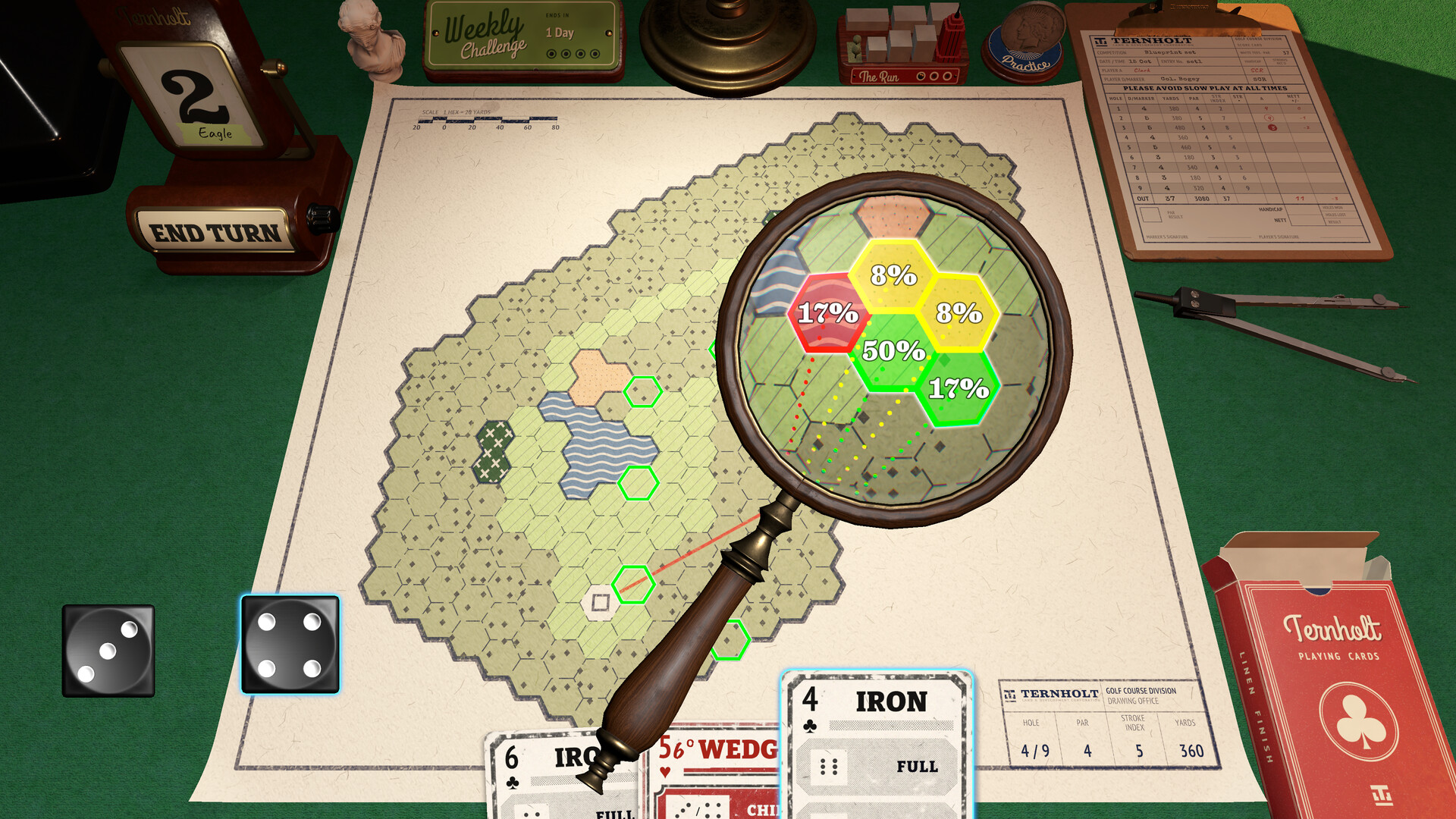
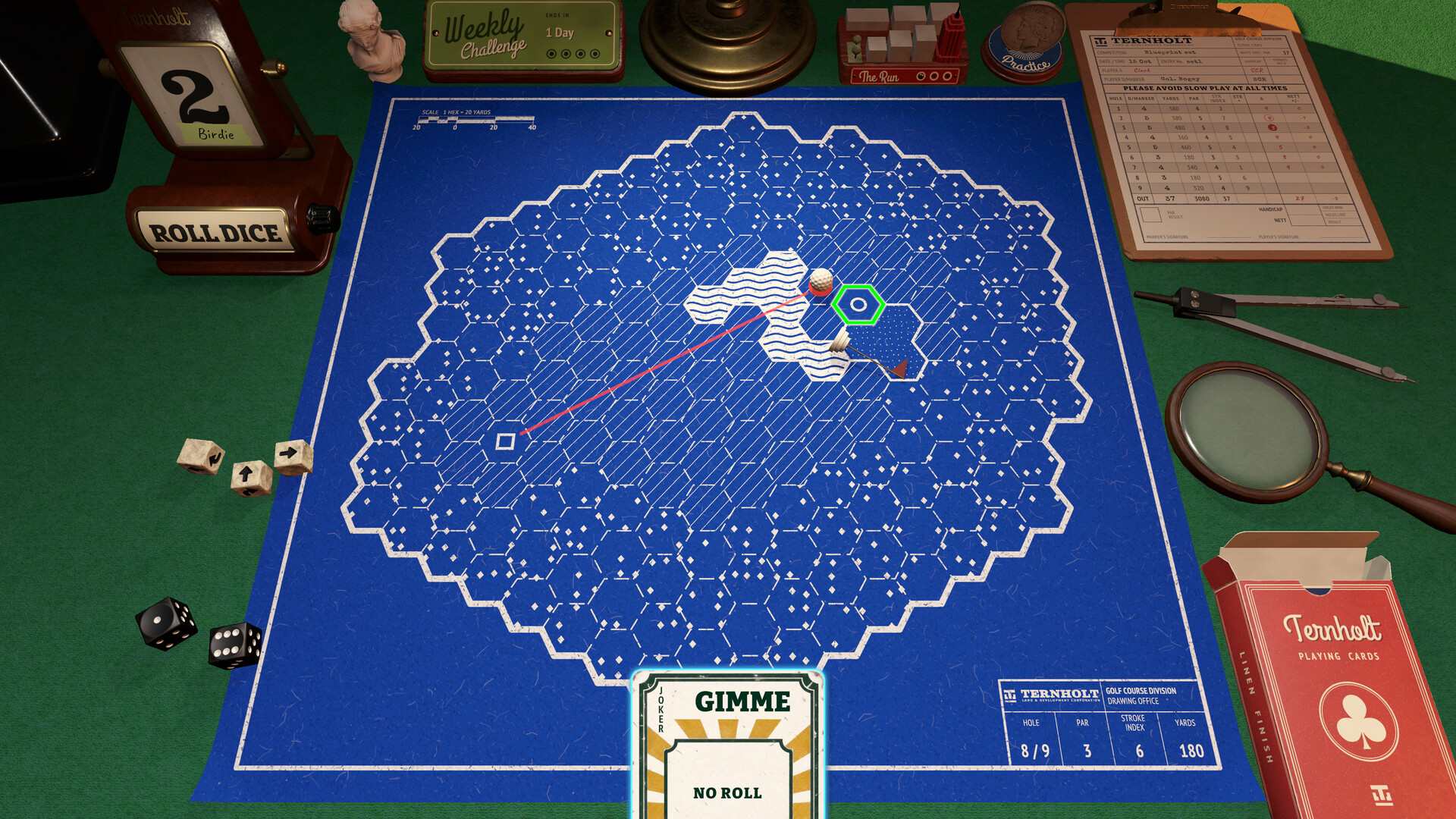
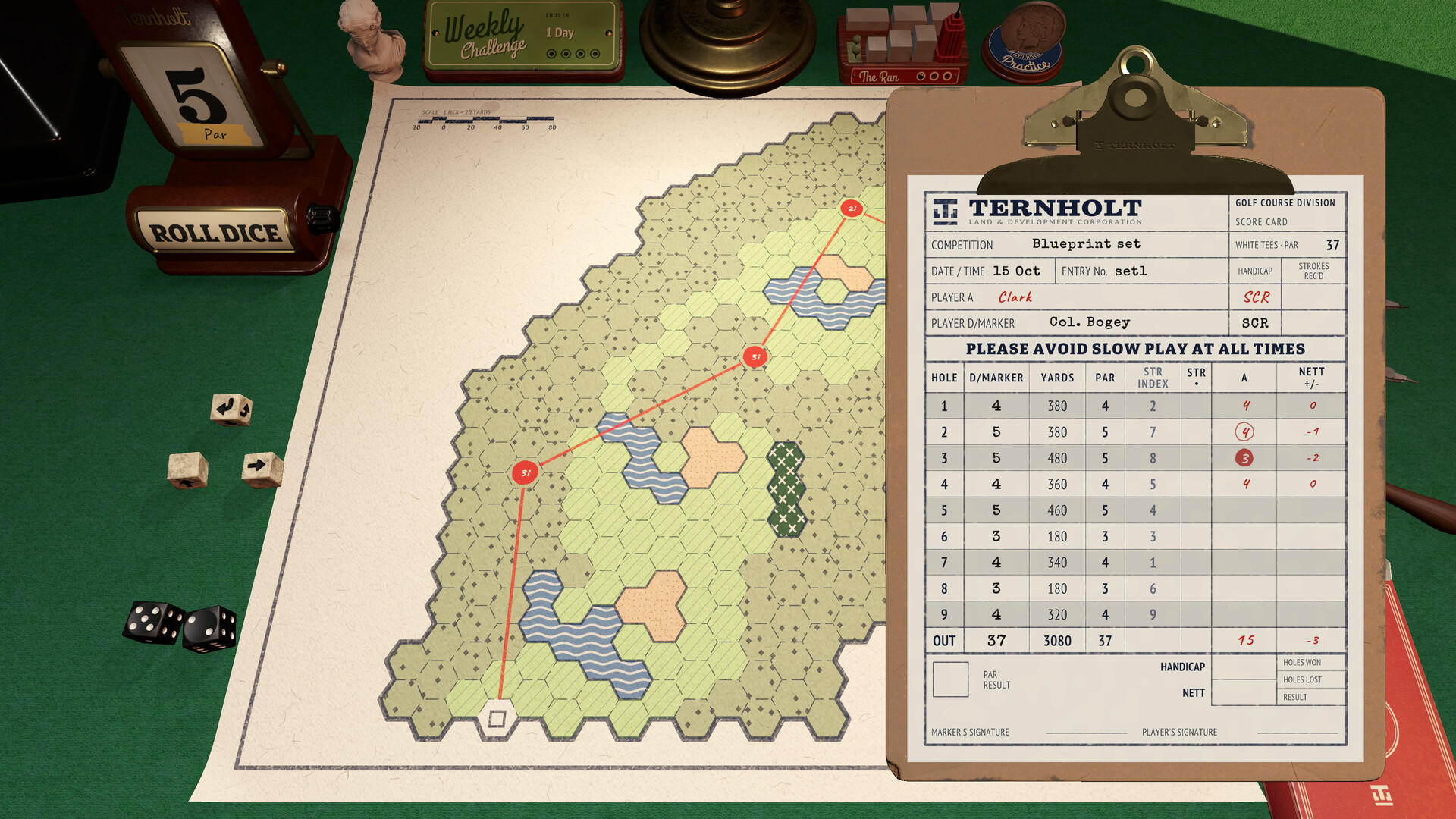
What to do with the number is between you and your bag: play it safe, or swing for more and risk a miss, the way you would on grass. The blueprint shows where the ball can finish and the odds of each before you commit. Sand steals distance. Trees block your line. Water punishes optimism.
Getting better here means seeing more, not hitting harder. Whoever misses best wins.
A deck of clubs
Your bag is a deck of ordinary playing cards, relabeled in pencil, one card per club, plus jokers that break the usual round. On a run you rework them the way a club maker would: bend a seven-iron into a six, or cross two clubs into a hybrid decades early. A bag holds only so many. Cover every distance and every lie, or carry a specialist and live with the gap. The same hole is a different puzzle with a different bag.
Match play
A run is a series of golf matches. You bet chips on them the way golfers bet a Nassau, and press when you’re behind. The toughest opponents play you hole for hole on the same blueprint, where their ball can stymie yours. Fall too far behind and the run is over.
Stroke play
- The campaign is 27 holes modeled on real golden-age classics, and your first day at the office teaches the method.
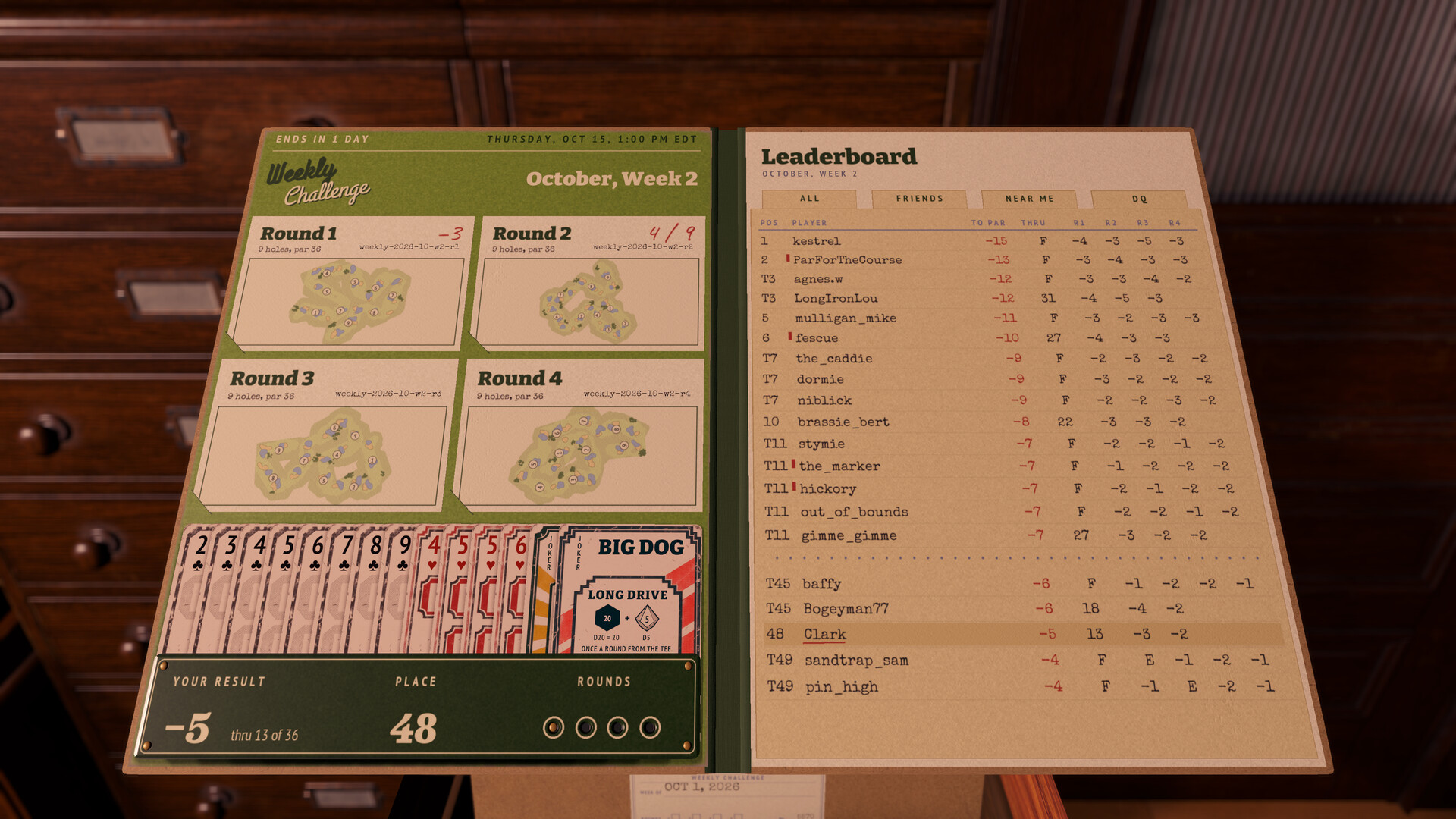
- The weekly is a new tournament every Thursday: four rounds of nine, the same holes, the same bag and the same dice rolls for everyone on a Steam leaderboard. Every score is checked by replay, and every past week stays open to play.
- A practice round is any course you like, from any seed, with nothing riding on it.
Nobody’s waiting on the tee
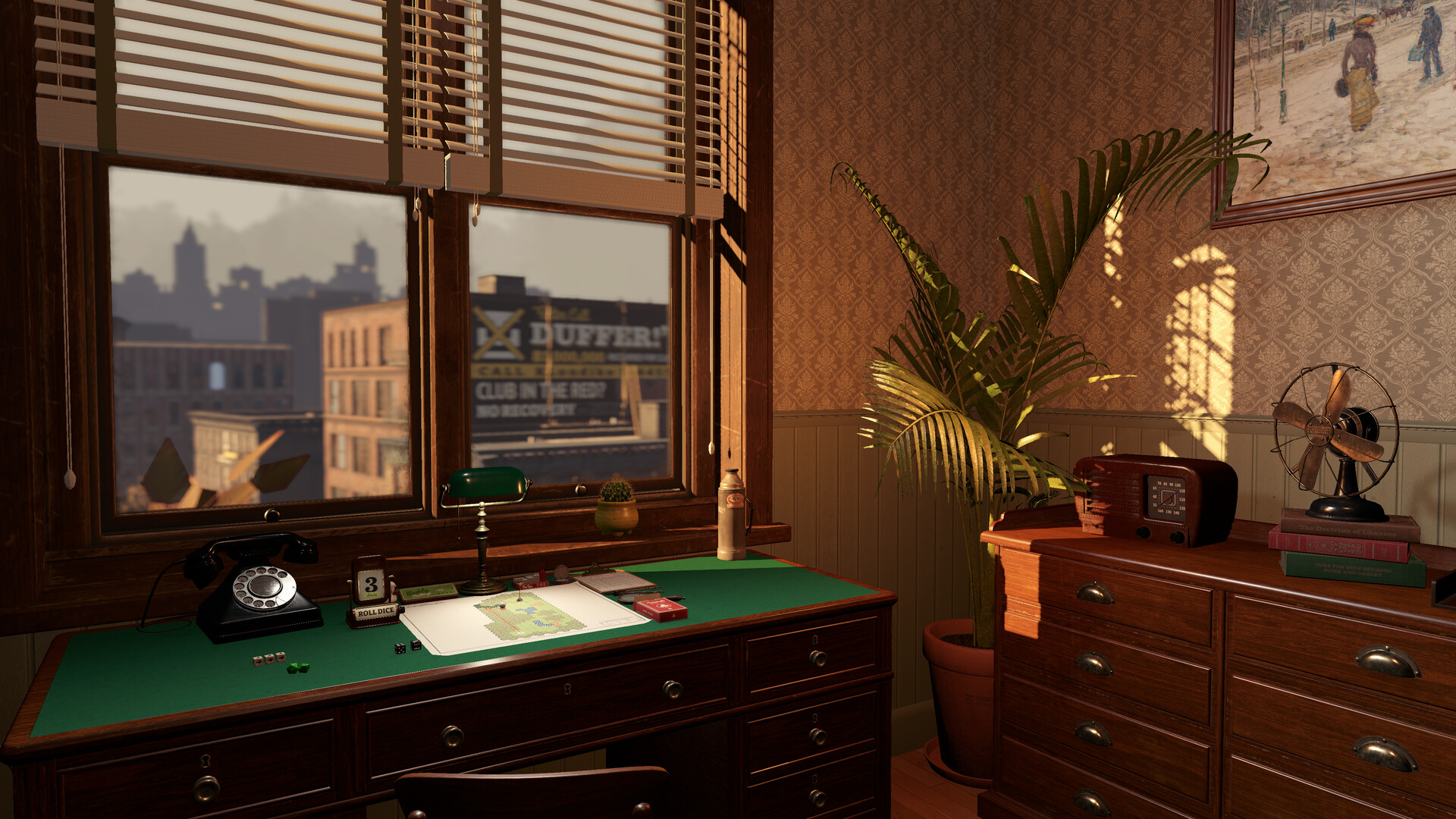
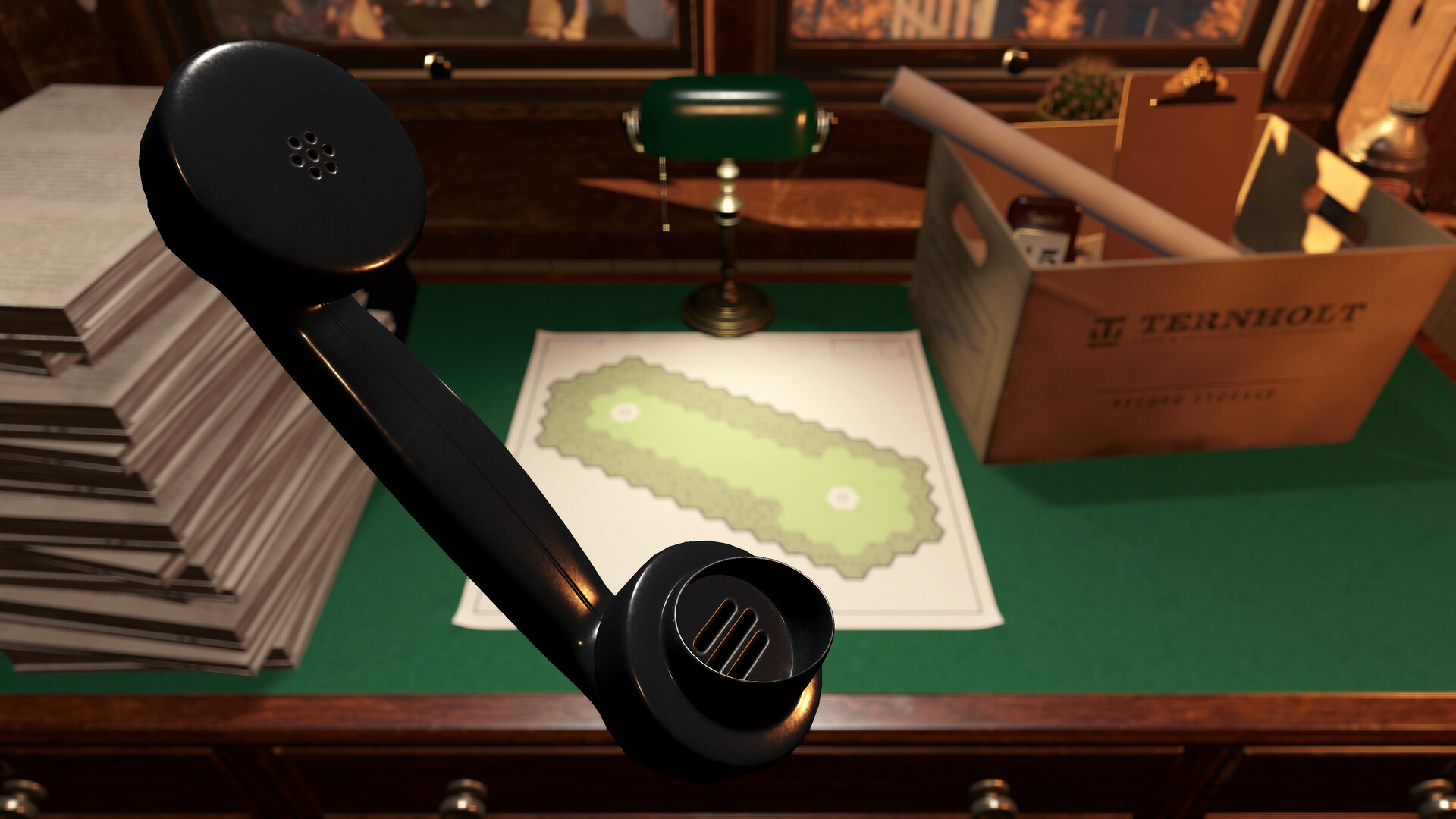
Golf on paper is desk work, and the desk is yours to set. Snow in January, a gray morning, a low October sun across the blueprint: the light and the weather change with the real seasons, or you pick your own and keep it. You check the odds through a magnifying glass, mark the strokes in pencil, and flip the desk calendar with each one. The radio plays low, and nothing here is on a clock.
Bad golf is a business
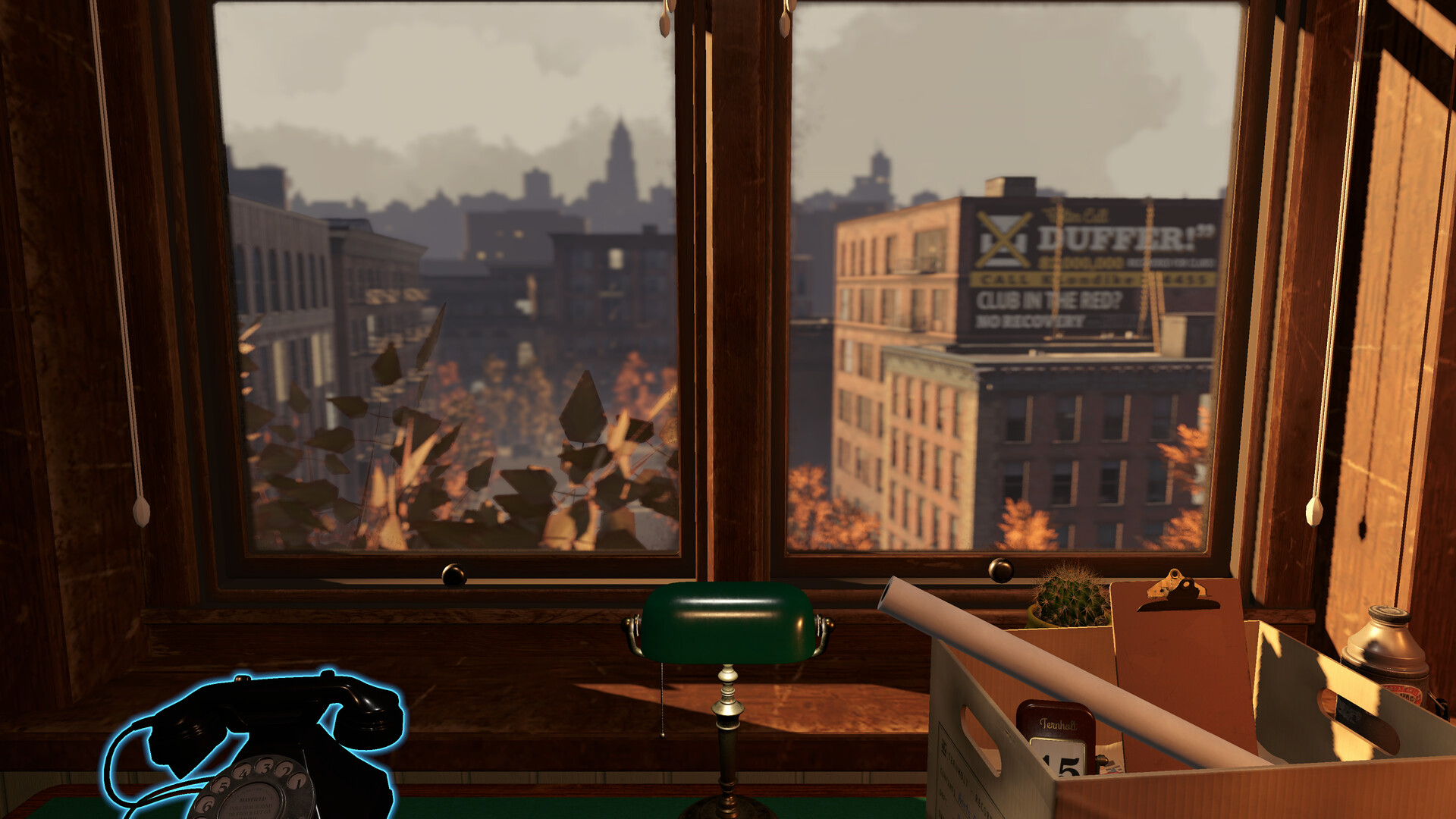
The story opens in the Great Depression. Since the Crash, country clubs have been losing members and money, and they have found a way out: every bad round is evidence that the course is unplayable, and the builder should pay for it. Mr. Duffer, the only golfer in America paid to play badly, collects their claims and has his name painted on walls all over town, including the one across from your window.
On the other side is the firm that built the courses. Its lawyers say they need a mathematician, so the firm hires the first one it can find, and that’s you. A whole industry of bad golf against one man with a Ph.D. in calculus. Nobody asks where you picked up the kind of math that gets people banned from casinos.
Your boss wants the numbers sorted out, and his only advice is “Think of something.” So you do.
Trailer
Need the video file for coverage? Write to pr@minorplanetgames.com and we will send a high-quality download.
Screenshots
1920×1080 JPEG. Click a screenshot for the full size.
Logos and art
You may use the screenshots, logos and art in coverage of the game.
- Par Under Review logoPNG, transparent, 1280×720
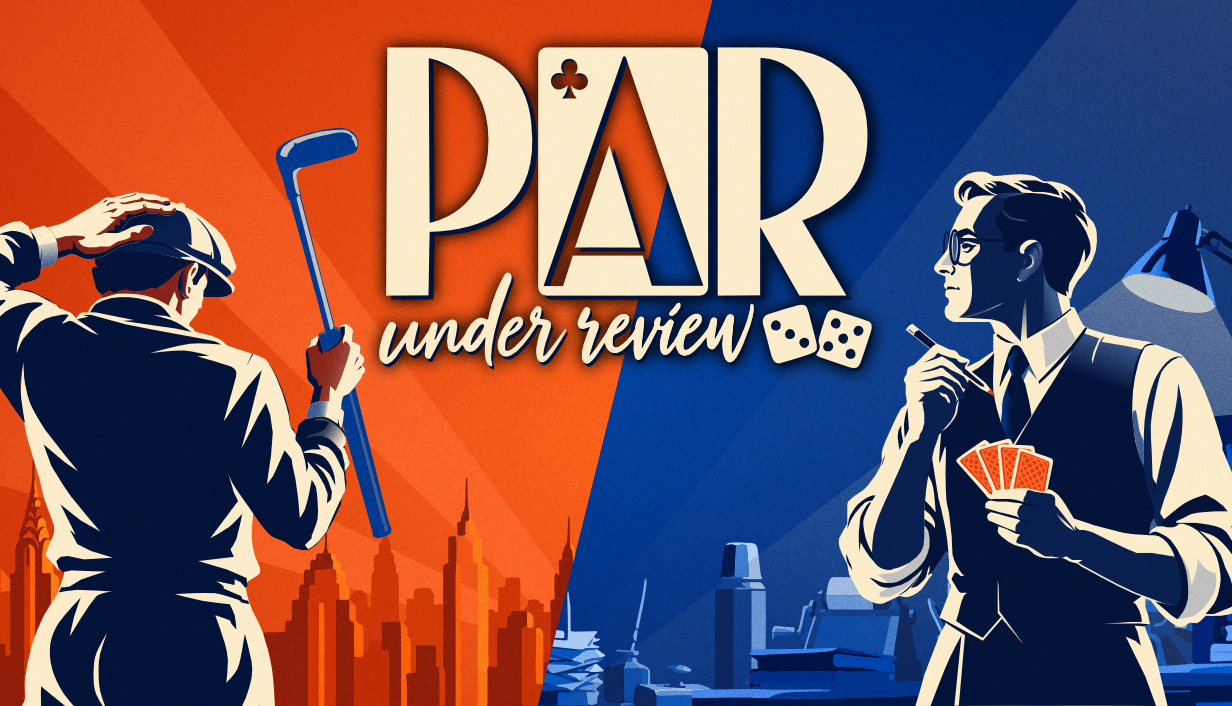
- Key artPNG, 1232×706
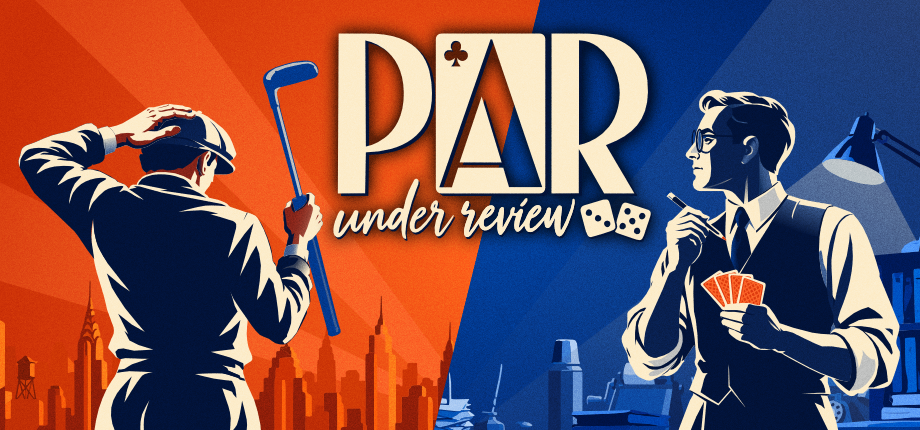
- Header capsulePNG, 920×430
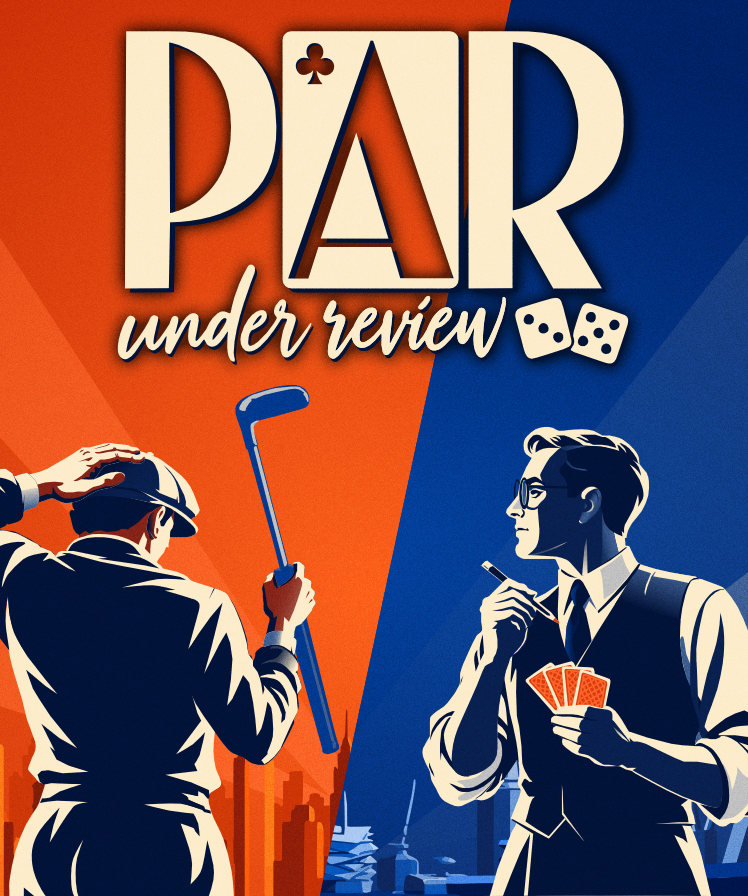
- Vertical capsulePNG, 748×896
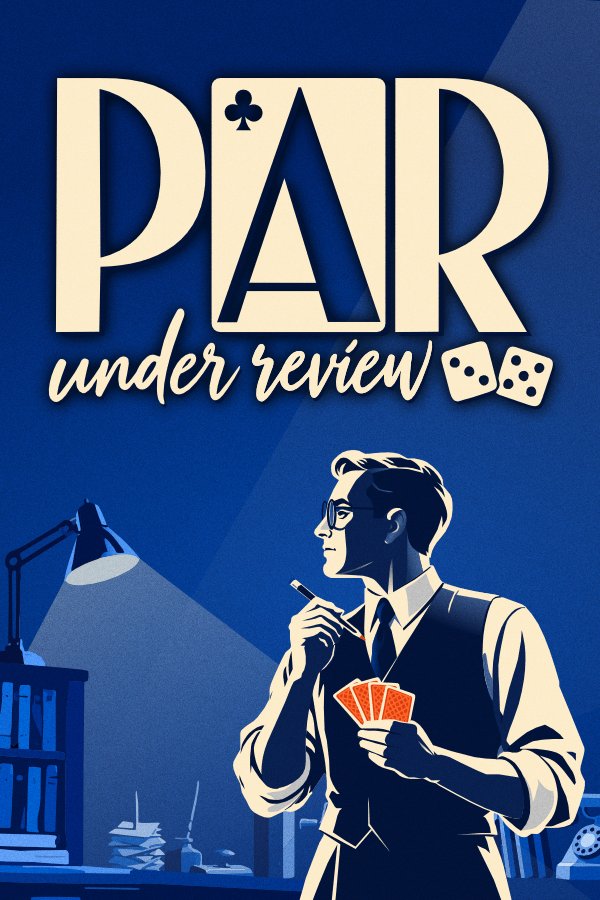
- Portrait capsulePNG, 600×900
- Wide hero artJPEG, 3840×1240
- Game iconPNG, 512×512
- Minor Planet Games logoPNG, 1024×1024
- Minor Planet Games avatarPNG, round, 1024×1024




About Minor Planet Games
Minor Planet Games is an independent game studio. Par Under Review is its first game, self-published on Steam.